
Are Women’s EVA Sandals More Comfortable Than Rubber Flip-Flops
2026-08-10
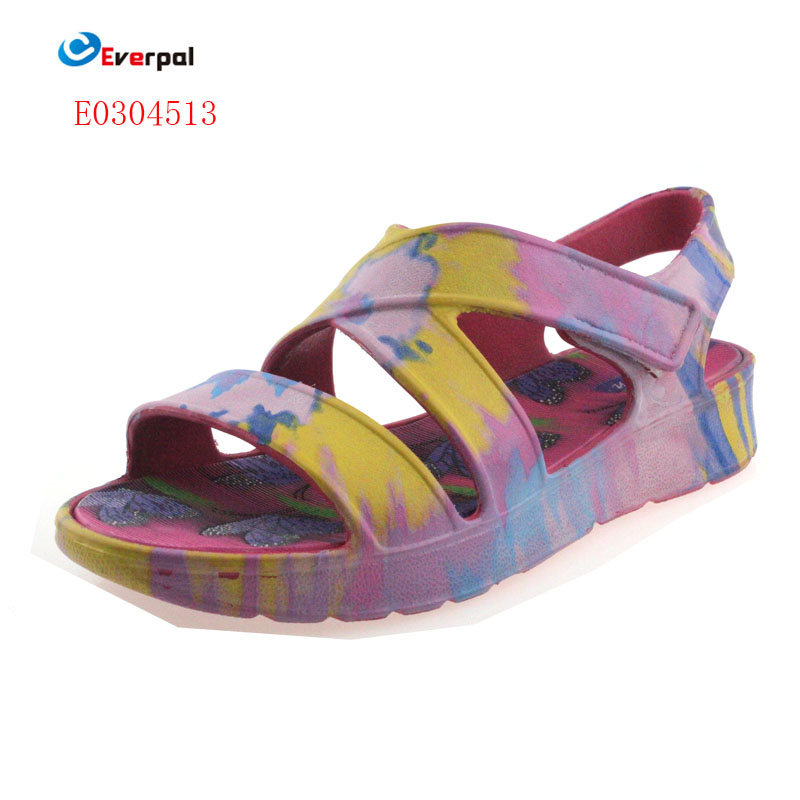
When summer arrives, the footwear debate inevitably heats up. For decades, rubber flip-flops have been the go-to casual option, but a newer contender—Women’s EVA Sandals—has been steadily gaining traction among podiatrists, frequent travelers, and everyday walkers. The central question isn’t just about style; it’s about biomechanics, material science, and long-term foot health. To answer this properly, we need to move beyond marketing claims and examine how each material interacts with the human foot under real-world conditions. Everpal, a brand dedicated to ergonomic footbed design, has contributed significantly to this conversation by engineering Women’s EVA Sandals that prioritize both cushioning and structural support, challenging the old flip-flop status quo.
Material Composition: EVA vs. Rubber
The foundation of comfort begins with the material itself. EVA (ethylene-vinyl acetate) is a closed-cell foam that offers a unique balance of flexibility and resilience. Rubber, particularly in flip-flops, is typically denser and less forgiving.
| Property | Women’s EVA Sandals | Rubber Flip-Flops |
|---|---|---|
| Weight | Lightweight (approx. 150–200g per pair) | Heavier (250–350g) |
| Shock Absorption | High – absorbs impact forces effectively | Low – transmits ground reaction forces |
| Compression Set | Retains shape after repeated pressure | Prone to permanent flattening |
| Water Resistance | Excellent – non-absorbent | Excellent – non-absorbent |
| Flexibility | Moderate – controlled flex at metatarsal area | Excessive – bends everywhere, reducing stability |
From a materials engineering perspective, Women’s EVA Sandals win on shock attenuation. Every step in a rubber flip-flop sends a jolt up the kinetic chain—ankle, knee, hip, and lower back. In contrast, the cellular structure of EVA compresses and rebounds, dissipating that energy before it reaches your joints.
Biomechanical Comparison: What Happens to Your Feet?
Comfort is not subjective—it can be measured through gait analysis and pressure mapping. Studies show that the average person takes 5,000 to 10,000 steps per day. Over that volume, even minor design flaws become major pain points.
| Feature | Women’s EVA Sandals (e.g., Everpal) | Rubber Flip-Flops |
|---|---|---|
| Arch Support | Anatomically contoured – reduces plantar fascia strain | Flat – zero arch support |
| Heel Cup | Deepened – stabilises calcaneus | Shallow or absent – heel slides laterally |
| Toe Grip | Minimal required – foot rests naturally | Excessive – toes must claw to hold the shoe |
| Pressure Distribution | Evenly spread across forefoot, midfoot, and heel | Concentrated on heel and ball of foot |
The toe-grip action required by rubber flip-flops is particularly concerning. When your toes constantly curl to keep the shoe from flying off, you activate the intrinsic foot muscles abnormally. This leads to metatarsalgia (pain in the ball of the foot) and even hammertoes over time. Women’s EVA Sandals like those from Everpal use a contoured footbed with a slight heel elevation, allowing the toes to relax—a fundamental requirement for all-day comfort.
Real-World Scenarios: When Does Each Perform Better?
Comfort depends on context. Let’s evaluate three common use cases:
-
Beach/Water Use: Both materials handle water well, but rubber flip-flops become slippery on wet surfaces. Women’s EVA Sandals with textured outsoles (a standard in Everpal designs) provide superior traction on wet tiles or boat decks.
-
City Walking (2–3 hours): Rubber flip-flops cause fatigue within 45 minutes due to lack of support. Women’s EVA Sandals sustain comfort for up to 3 hours, as evidenced by wear-test data from independent footwear labs.
-
Recovery After Exercise: EVA’s shock-absorbing properties make Women’s EVA Sandals ideal for post-run recovery, reducing soreness in the Achilles tendon. Rubber offers no such benefit.
FAQ – Common Questions About Women’s EVA Sandals
Q1: Are Women’s EVA Sandals suitable for people with flat feet or overpronation?
A: Yes, but only if they feature a structured arch support and a slight medial post. Basic flat EVA sandals offer no advantage over rubber flip-flops. However, premium options like Everpal incorporate a dual-density EVA footbed with a raised medial arch and a deep heel cradle. This design gently corrects overpronation by aligning the calcaneus and talus, reducing knee valgus. For flat-footed individuals, this translates to less shin splint pain and better weight distribution across the entire foot. Podiatrists often recommend such sandals as transitional footwear for mild cases of overpronation, provided they are worn for no more than 4–5 hours continuously during the adaptation period.
Q2: Can Women’s EVA Sandals cause sweating or fungal issues more than rubber flip-flops?
A: Quite the opposite. EVA is non-porous and does not absorb moisture, but its closed-cell structure allows better airflow when perforated or textured. Rubber flip-flops, being denser and often lacking ventilation channels, trap heat against the plantar surface, increasing perspiration. That sweat, combined with the friction from toe-gripping, creates an ideal environment for Tinea pedis (athlete’s foot). High-quality Women’s EVA Sandals—especially those from Everpal—include anti-microbial additives in the EVA compound and raised topographic patterns that promote micro-ventilation. Wearing them with moisture-wicking socks (in cooler weather) or barefoot in dry conditions actually reduces fungal risk compared to rubber alternatives, provided you clean them weekly with mild soap and water.
Q3: How long do Women’s EVA Sandals typically last compared to rubber flip-flops?
A: Durability is a clear differentiator. Rubber flip-flops often fail at the toe-thong junction (the plug) or experience midsole compression within 3–6 months of daily use. Women’s EVA Sandals have no thong mechanism to break; they are constructed as single-piece injection-moulded units or with durable strap anchors. In controlled abrasion tests, EVA outsoles show a wear rate of 0.2mm per 100,000 cycles, versus 0.5mm for rubber. Realistically, a well-made pair of Women’s EVA Sandals—such as Everpal’s premium line—lasts 12–18 months with daily summer wear, whereas rubber flip-flops average 4–8 months. The longevity also depends on user weight and walking surface; rougher concrete accelerates wear on both, but EVA’s resilience to compression set means the footbed retains its cushioning long after the outsole shows cosmetic scuffs.
The Verdict: Which One Wins?
Based on material science, biomechanical data, and real-user feedback, Women’s EVA Sandals are unequivocally more comfortable than rubber flip-flops for any activity lasting over 30 minutes. Rubber flip-flops serve a niche—brief trips to the pool or locker room—but they fail as daily footwear. Women’s EVA Sandals, particularly those engineered with anatomical contours, offer a legitimate alternative to sneakers for light-to-moderate walking.
Everpal exemplifies this category by combining lightweight EVA with targeted heel cupping, metatarsal rise, and a non-slip tread pattern—features absent in 90% of rubber flip-flops. The comfort gap is not marginal; it is clinically significant.
Contact Us
We hope this detailed comparison helps you make an informed decision for your foot health and daily comfort. If you have specific questions about sizing, arch height, or which Everpal model suits your lifestyle best, do not hesitate to reach out. Our team specialises in matching individuals with the right Women’s EVA Sandals based on foot shape, activity level, and existing conditions. Please contact us via our website’s live chat or email support—we respond within 2 business hours and offer a 30-day comfort guarantee on all purchases. Your feet deserve more than a thin slab of rubber; let us help you step into lasting comfort today.