

How Does Sole Flexibility Affect the Walking Experience in Women's Clogs Slippers?
2026-10-15
Sole flexibility plays an important role in how Women's Clogs Slippers feel during everyday walking, influencing foot movement, cushioning, stability, and fatigue over time. A sole that bends in the right places can help the foot move naturally through each step, while a sole that is excessively stiff may restrict movement. On the other hand, a sole that bends too easily may provide insufficient support on uneven surfaces. At Xiamen Everpal Trade Co., Ltd, we consider sole construction, material selection, outsole geometry, and intended use when developing footwear for different markets. For retailers and footwear buyers, understanding these factors helps identify products that balance comfort, durability, and practical everyday performance.
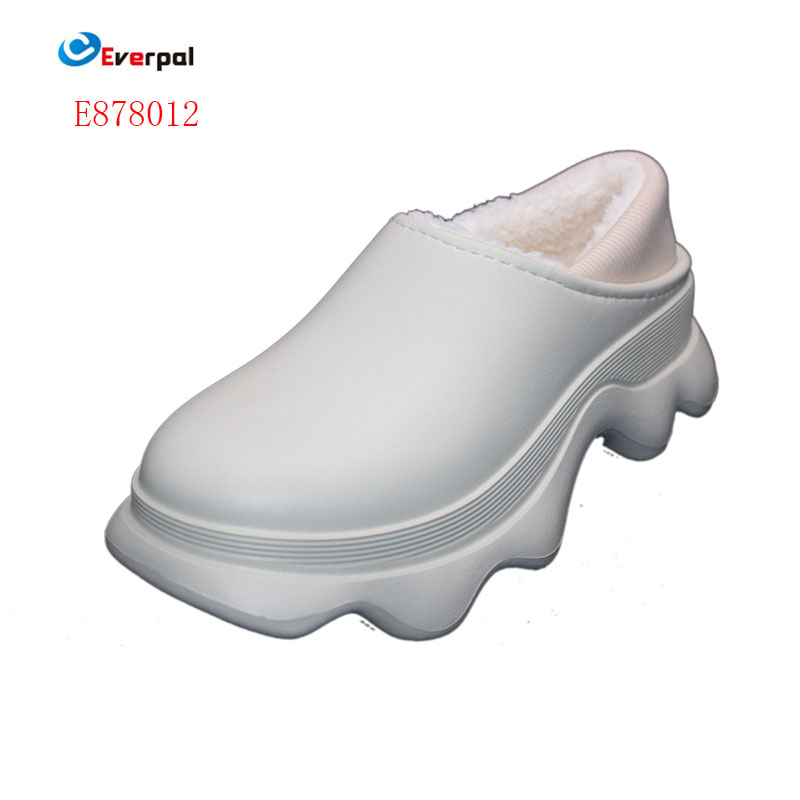
Why Does Sole Flexibility Change the Way Each Step Feels?
Walking is a repeated sequence of heel contact, weight transfer, and toe-off. During this cycle, the foot changes shape slightly as the body moves forward. The sole needs to accommodate this movement without collapsing or forcing the foot into an unnatural position.
A moderately flexible sole can make a clog feel less restrictive, particularly during short walks around the home, garden, office, or other casual environments. When the forefoot bends at an appropriate point, the shoe can follow the natural movement of the toes as the heel lifts. This can create a smoother transition between steps and reduce the sensation of walking in a rigid platform.
Flexibility also affects perceived cushioning. A sole that deforms slightly under load may help soften initial contact, but bending flexibility and shock absorption are not the same property. Cushioning depends on the material's compression behaviour, thickness, density, and ability to recover after repeated loading. A flexible outsole made from a firm compound may still feel hard underfoot, while a cushioned midsole may absorb impact even if its outer tread is relatively stiff.
Our product development approach considers these characteristics together rather than treating flexibility as the only measure of comfort. For everyday footwear, the goal is to achieve controlled movement with sufficient support beneath the heel and midfoot. The appropriate balance depends on the wearer's walking habits, foot shape, preferred fit, and the surfaces on which the footwear will be used.
Which Sole Materials Offer the Right Balance of Flexibility and Support?
Material choice strongly influences how a clog sole bends, compresses, and returns to its original shape. EVA, rubber, and other footwear compounds have different mechanical characteristics. However, the finished sole's performance also depends on its formulation, thickness, geometry, and manufacturing process. Material names alone do not establish whether a shoe will feel flexible or comfortable.
| Sole material or construction | Flexibility and cushioning characteristics | Typical considerations for buyers |
| EVA foam | Often lightweight and capable of providing cushioning, with flexibility varying by density and formulation | Suitable for casual comfort designs where low weight and underfoot softness are priorities |
| Rubber outsole | Can provide traction and abrasion resistance; bending behaviour depends on compound hardness, thickness, and tread design | Useful where grip and outsole durability are important |
| PU sole | May provide cushioning and resilience, depending on the polyurethane formulation and construction | Evaluate compression recovery, weight, hydrolysis resistance where relevant, and intended service conditions |
| Thick molded sole | May resist bending more than a thinner sole made from a similar material | Review flex grooves, sole profile, weight, and the intended balance between stability and mobility |
| Layered sole construction | Different layers can contribute separately to cushioning, flexibility, and ground contact | Check bonding quality, flex behaviour, and compatibility between materials |
EVA is commonly used in lightweight casual footwear because it can combine low weight with useful cushioning. Its performance varies according to foam density, cell structure, and compound formulation. A softer EVA compound may feel comfortable initially, but excessive compression or poor recovery can affect how the sole feels after repeated wear.
Rubber is frequently selected for the outsole because it can offer useful abrasion resistance and traction. A rubber outsole does not necessarily need to be rigid. Compound formulation, tread thickness, grooves, and the shape of the sole all influence how easily it bends. A well-designed rubber outsole can provide grip while allowing controlled forefoot movement.
PU constructions can also provide a balance of resilience and cushioning. Their suitability depends on the specific formulation and expected conditions, including exposure to moisture, heat, and repeated compression. Buyers should assess the finished product rather than assuming all PU or EVA soles perform identically.
At our factory, the intended application should guide the selection of sole materials and construction. Indoor slippers, casual outdoor clogs, and footwear intended for extended walking have different priorities. For a lightweight leisure style, low weight and soft underfoot feel may be central. For outdoor use, traction, outsole wear, and stability may require greater attention.
How Can Sole Design Improve Comfort Without Sacrificing Stability?
Comfort depends on more than how far a sole can bend. The location of the flex point, heel stability, footbed shape, outsole width, and upper fit all contribute to the walking experience. A sole that bends naturally beneath the forefoot may feel more comfortable than one that bends at the middle of the arch, even if both show a similar amount of overall flexibility.
For clogs, the relationship between the sole and the upper is particularly important. Many designs have a roomy toe box and an open back or a low heel counter. This construction can make the shoes convenient to slip on and off, but it also means the wearer may rely more on a secure fit and stable underfoot platform to keep the shoe positioned during movement.
- Forefoot flex point: The sole should bend in a location that accommodates the natural movement of the toes during toe-off.
- Midfoot support: The sole should resist unwanted twisting or collapse when the foot transfers weight.
- Heel platform: A stable heel base can help the wearer feel more secure during initial ground contact.
- Footbed contour: The shape of the footbed influences pressure distribution and how the foot sits inside the clog.
- Outsole tread: The tread pattern and compound affect grip, especially on smooth or slightly damp surfaces.
- Upper fit: Adequate room for the toes and a secure overall fit help reduce sliding and rubbing during walking.
Flex grooves can help a sole bend at selected points without making the entire structure overly soft. Their depth, spacing, direction, and position should be coordinated with the thickness and stiffness of the material. Poorly positioned grooves may create concentrated stress or allow the sole to fold in an uncomfortable way.
It is also important to distinguish flexibility from torsional stability. Longitudinal flexibility describes how readily a sole bends from heel to toe, while torsional stiffness describes its resistance to twisting. A design can be flexible at the forefoot yet retain sufficient resistance to twisting through the midfoot. For many casual applications, this combination is more useful than maximizing flexibility throughout the entire sole.
Our design evaluation takes the full footwear structure into account. The upper, footbed, outsole, and heel geometry need to work together to produce a consistent fit and walking feel. A highly flexible sole cannot compensate for an oversized upper, poor heel retention, or an unstable platform.
What Product Parameters Should Buyers Evaluate Before Placing an Order?
For footwear importers, wholesalers, and private-label brands, a clear technical specification helps ensure that the selected clog meets the requirements of its target market. Sole flexibility should be evaluated alongside measurable product characteristics, wear performance, and fit. The following parameters provide a practical starting point for product development and supplier discussions.
| Product parameter | What to specify or verify | Why it matters |
| Sole material | EVA, rubber, PU, or the specified combination of materials | Influences weight, cushioning, flexibility, and wear characteristics |
| Sole thickness | Measured at agreed reference points, including heel and forefoot where applicable | Affects bending resistance, cushioning, weight, and platform stability |
| Flexibility | Define an agreed bending test method, test location, and acceptance range | Provides a more repeatable basis for comparing production samples |
| Hardness | Specify the relevant material and test method, such as Shore A where appropriate | Helps characterize compound firmness but does not independently determine comfort |
| Outsole traction | Identify the required test conditions and applicable slip-resistance standard | Helps assess grip on surfaces relevant to intended use |
| Wear resistance | Agree on the applicable abrasion test and acceptance criteria | Supports evaluation of outsole durability during repeated use |
| Size and fit | Specify the size range, internal dimensions, and fit expectations | Reduces the risk of excessive movement, rubbing, or an unsuitable fit |
| Colour and finish | Confirm colour references, surface texture, and appearance requirements | Helps maintain consistency across production batches |
Exact numerical targets should be established for the specific design instead of using a universal flexibility value. A thick platform clog and a low-profile indoor slipper will not necessarily perform best under the same bending-force requirement. Likewise, hardness readings cannot be compared reliably unless the test method, specimen condition, and measurement location are appropriate.
During sample approval, buyers can assess the sole by checking whether it bends at the intended point, whether the heel remains stable, and whether the shoe returns to its original shape after bending. These observations are useful for preliminary screening, but they do not replace laboratory testing where repeatability, safety, or formal compliance is required.
Xiamen Everpal Trade Co., Ltd supports product discussions around construction, materials, appearance, and application requirements. Buyers should provide target-market expectations, reference samples or drawings where available, size requirements, and any applicable test standards. These details help establish realistic specifications before bulk production and reduce avoidable differences between approved samples and delivered goods.
Frequently Asked Questions About Sole Flexibility
How flexible should a clog sole be for comfortable everyday walking? A comfortable sole should bend at an appropriate forefoot location while retaining enough support to prevent unwanted folding or twisting through the midfoot. The ideal level depends on sole thickness, material formulation, fit, and intended use. A lightweight indoor clog may prioritize easy bending and cushioning, whereas an outdoor style may require a more supportive platform and durable tread. Buyers should evaluate the complete shoe through fit trials and agreed flexibility tests rather than selecting a product based on softness alone.
Does a softer and more flexible sole always reduce foot fatigue? No. A softer sole can improve perceived cushioning, but excessive deformation may make walking feel less stable or require additional muscular effort to control the foot. Fatigue is also influenced by fit, shoe weight, walking duration, surface conditions, and individual biomechanics. A balanced design combines suitable cushioning with controlled bending, stable support, and an appropriate fit. Wear trials under realistic conditions provide a more useful assessment than flexibility measurements alone.
How can footwear buyers verify sole flexibility and durability before bulk production? Buyers should approve a representative sample and agree on the test method, measurement points, and acceptance criteria for bending performance, outsole abrasion, hardness where relevant, and slip resistance. They should also examine flex-groove placement, bonding, dimensional consistency, and recovery after repeated bending. Tests need to reflect the product's intended use and applicable standards. Documenting the approved sample and inspection requirements helps maintain consistency between product development and subsequent production batches.
How Can the Right Sole Specification Support Better Product Performance?
Sole flexibility influences how naturally a clog bends during walking, but the best result comes from balancing flexibility with cushioning, traction, stability, and durability. EVA, rubber, PU, and layered constructions each offer different possibilities, and their performance depends on material formulation and finished sole geometry. For buyers developing casual footwear, the most reliable approach is to define the intended use first, then evaluate the complete product against clear technical requirements.
Xiamen Everpal Trade Co., Ltd works with footwear buyers to assess product construction and specification requirements for different markets. Contact our team with your preferred sole material, target flexibility, size range, design references, and testing requirements to discuss a suitable Women's Clogs Slippers solution for your collection.