
What Factors Matter When Choosing a Women's Winter Slippers Supplier?
2026-10-28
A footwear buyer reviews the return data for a winter slipper line. The return rate is 14 percent. The most common complaint is not the color or the fit. It is the warmth. The slippers feel warm in the store but lose their loft after two weeks. The second complaint is the sole. The slippers slip on wet tile floors. The buyer realizes that the sample that was approved before production was made from a different lining batch and a different sole compound than the production order. The supplier had substituted materials without notification. This is why supplier selection for Women's Winter Slippers is not about finding the lowest price. It is about finding a supplier whose material specifications and production controls are stable from sample to bulk. This guide explains the factors that matter.
1. Why Does the Supplier's Material Choice Decide Whether Winter Slippers Sell or Sit on the Shelf?
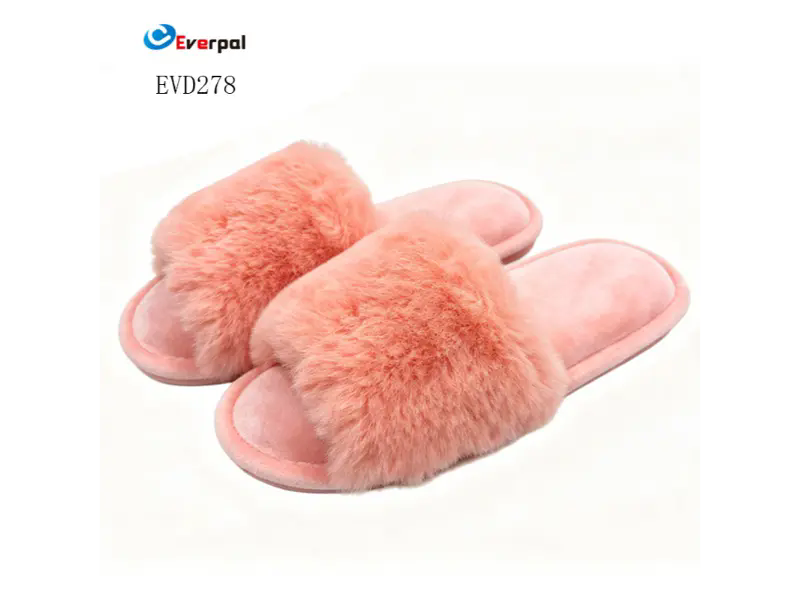
The material of a Women's Winter Slippers determines the perceived warmth, the comfort, and the durability. The upper and lining are usually made from short plush, long plush, or faux rabbit fur. The warmth depends on the pile density and the filling layer. The durability depends on the fiber quality and the backing. A low-density plush looks full in the sample but flattens after a few weeks of wear. A high-density plush retains its loft. The difference is not visible in a photograph. It is visible in the return rate. In our factory, we produce Women's Winter Slippers with plush density from 280 to 550 grams per square meter and with filling layers from 10 to 25 millimeters. Xiamen Everpal Trade Co., Ltd has been manufacturing winter slippers for over 10 years.
The sole compound also determines the return rate. A soft EVA sole is comfortable indoors but has poor grip on wet tile. A TPR or rubber sole provides better grip but is heavier. The buyer must match the sole to the target market. A slipper sold in a cold climate with snow and ice needs a different sole than a slipper sold in a mild climate for indoor use.
2. What Should Buyers Check in the Upper and Lining Specifications?
The buyer should check three specifications. The first is the plush density, expressed in grams per square meter. The second is the pile height, expressed in millimeters. The third is the filling layer, expressed in density and thickness. The combination of these three determines the warmth rating. The table below shows the combinations for different markets and price points.
| Plush density (g/m²) | Filling thickness (mm) | Warmth rating | Typical market |
| 280 – 350 | 10 – 12 | Moderate | Mild winter, indoor |
| 350 – 450 | 12 – 18 | Good | Standard winter, indoor |
| 450 – 550 | 18 – 25 | High | Cold winter, indoor and outdoor |
| 550+ | 25+ | Very high | Extreme cold, premium |
In our factory, we measure the plush density by cutting a sample of known area and weighing it. We also measure the pile height with a thickness gauge. The filling layer is specified by density and thickness and is verified by a compression test. Xiamen Everpal Trade Co., Ltd provides the material specification sheet with every quotation so that the buyer can compare suppliers on the same basis.
3. How Does Sole Compound and Tread Design Affect Winter Safety and Returns?
The sole is the second most common source of returns. In winter, the floor can be wet from melted snow, and the slipper must provide grip. The coefficient of friction depends on the sole compound and the tread pattern. EVA has a coefficient of friction of 0.3 to 0.4 on wet tile. TPR has 0.5 to 0.6. Rubber has 0.6 to 0.7. The tread pattern also matters. A deep groove pattern with drainage channels provides better grip than a smooth pattern. The table below shows the friction coefficient and the recommended application for common sole materials.
| Sole material | Friction coefficient on wet tile | Low temperature flexibility | Recommended application |
| EVA | 0.3 – 0.4 | Good above -10°C | Indoor, dry floor |
| TPR | 0.5 – 0.6 | Good above -15°C | Indoor and light outdoor |
| Rubber | 0.6 – 0.7 | Good above -20°C | Outdoor, snow and ice |
| EVA with rubber insert | 0.5 – 0.6 | Good above -15°C | Indoor with occasional outdoor use |
Sourcing note: The sole compound must be matched to the climate of the target market. A slipper with an EVA sole sold in a market with wet winters will generate returns. In our factory, we recommend TPR for standard winter markets and rubber for markets with snow and ice. We also recommend a tread depth of at least 2 millimeters with drainage channels. Xiamen Everpal Trade Co., Ltd provides sole samples and friction test data so that the buyer can verify the grip before ordering.
4. Why Does the Supplier's Sizing Consistency and Production Control Matter More Than the Sample?
The sample is made by the sample room, often by a senior technician, using the best materials from the warehouse. The bulk order is made by the production line, using materials from different batches and operators with different skill levels. If the supplier does not control the last shape, the cutting, and the stitching, the bulk product will not match the sample. The most common inconsistencies are the length and width of the slipper, the position of the opening, and the color of the plush. In our factory, we control the last shape with a master mold that is checked every month. We control the cutting with a CNC cutter that is programmed from the digital pattern. We control the stitching with a template and a stitch counter. Xiamen Everpal Trade Co., Ltd also checks the first production batch against the approved sample before releasing the full run.
The color consistency is a particular challenge with plush materials because the pile reflects light differently depending on the direction. The buyer should approve the color under the same lighting conditions that will be used in the store. The supplier should also provide a color tolerance range and a batch-to-batch color comparison.
5. How Should Buyers Qualify and Verify a Women's Winter Slippers Supplier?
The qualification should include four checks. The first is the factory audit, which verifies the production capacity, the equipment, and the quality control process. The second is the material test reports, which verify the plush density, the filling compression, and the sole friction coefficient. The third is the sample evaluation, which verifies the warmth, the grip, and the fit. The fourth is the reference check, which verifies the supplier's delivery record and the customer complaints. The verification at each shipment should include a visual inspection, a measurement of the length and width, and a pull test of the sole bond. In our factory, we provide the test reports and the inspection records with each shipment. Xiamen Everpal Trade Co., Ltd also offers a third-party inspection service for buyers who require independent verification.
We recommend that the buyer sign a quality agreement that specifies the material specifications, the acceptance criteria, and the remedies for non-conformance. The agreement should also require the supplier to notify the buyer before any change in material, sole compound, or production site. This prevents the substitution problem that caused the high return rate in the example above.
Frequently Asked Questions About Choosing a Women's Winter Slippers Supplier
Summary for Footwear Buyers and Sourcing Managers
Choosing a Women's Winter Slippers supplier requires attention to four factors: the plush density and filling that determine warmth, the sole compound and tread that determine grip, the sizing consistency that determines fit, and the qualification process that determines reliability. The sample is not enough. The buyer must verify the material specifications and the production controls. The supplier must be willing to sign a quality agreement with change notification. Xiamen Everpal Trade Co., Ltd has been manufacturing winter slippers for over 10 years and provides full material testing and production control documentation for our customers.