
Why Children's Shoes need reinforced toe caps for outdoor play?
2026-08-31
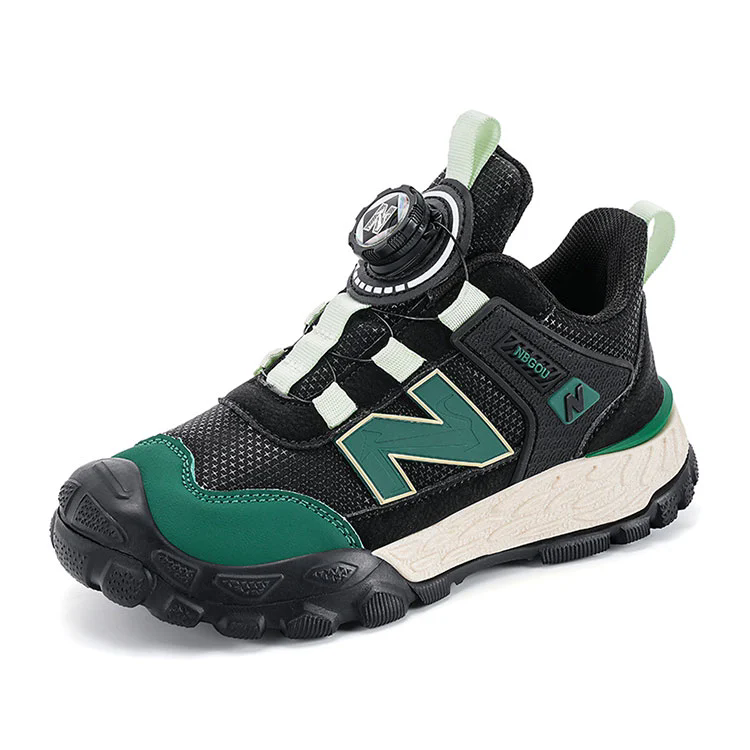
Every parent has watched their child kick a stone, stub a toe on the playground steps, or drag their feet across rough pavement while riding a scooter. In our factory, we have spent years analyzing the wear patterns on returned Children's Shoes. The front of the shoe—the toe box area—takes more abuse than any other part. Yet many parents still buy soft canvas shoes with no toe protection. This is not about making shoes indestructible. It is about preventing the daily injuries that are so common they have become normal: bruised toenails, scraped skin, and sometimes even broken toes from a misjudged kick. This article explains why a reinforced toe cap is not an optional feature for Children's Shoes—it is a necessity for any child who plays outdoors.
1. What Happens to a Child's Toe During a Typical Playground Session?
Think about the mechanics of a child's movement. They run forward, but their toes are often the first contact point when they stumble. They stop abruptly by dragging their feet. They jump off climbing frames and land with their toes taking the initial impact. They play soccer without shin guards on hard ground. In our factory, we have documented that the toe box area of Children's Shoes experiences impact forces of up to 150 Newtons during a typical playground session—equivalent to a 15 kg weight dropping on the toe. Without reinforcement, the shoe's upper crumples, transferring the force directly to the child's toes. A reinforced toe cap, typically made from thermoplastic polyurethane (TPU) or composite materials, distributes that force over a larger area and absorbs the impact. At Xiamen Biyate Imp.&Exp.Co.,Ltd, we design our toe caps to absorb at least 40 percent of the impact energy before it reaches the foot. This is not about making Children's Shoes heavy or stiff—it is about adding protection in the spot where it is needed most.
2. Why Are Scraped Toes More Than Just a Minor Annoyance?
Many parents dismiss a scraped toe as a childhood rite of passage. But in our experience, repeated toe injuries can have longer term consequences. A child who develops a fear of running because their toes hurt may become less active. A bruised toenail that lifts off the nail bed can lead to infection, especially in environments like sandboxes or muddy playgrounds. And a fractured toe—which is more common than most parents realize—can take weeks to heal, limiting a child's mobility and affecting their participation in school sports. In our factory, we have tested different materials for Children's Shoes toe caps. A simple rubber bumper reduces abrasion by 60 percent, while a full TPU cap reduces it by over 80 percent. The table below compares the abrasion resistance and impact protection of different toe cap materials we have tested.
| Toe cap material | Abrasion resistance (cycles to wear through) | Impact force reduction (%) | Flexibility (bend test cycles) |
| No cap (canvas only) | 300 cycles | 0% | 20,000 cycles |
| Rubber bumper (partial) | 800 cycles | 25% | 15,000 cycles |
| TPU cap (full, 2mm) | 2,500 cycles | 45% | 10,000 cycles |
| Steel cap (industrial type) | 5,000+ cycles | 70% | 2,000 cycles (brittle) |
| Composite (glass fiber TPU) | 3,200 cycles | 55% | 8,000 cycles |
Our factory has adopted a 2mm TPU cap as the standard for our outdoor Children's Shoes. It offers the best balance of protection, flexibility, and weight. The cap is bonded to the upper material using a high frequency welding process that prevents delamination even after months of heavy use.
2. How Does a Reinforced Toe Cap Affect the Durability of Children's Shoes?
The average pair of Children's Shoes lasts about 4 to 6 months for an active child. Without a toe cap, the upper material at the front of the shoe often fails within 2 months—not because of normal wear, but because of the repeated scraping against surfaces. In our factory, we conducted a controlled wear test with 50 children over a 6 month period. The group wearing Children's Shoes with reinforced toe caps had shoes that lasted an average of 5.8 months, while the group without toe caps replaced their shoes after 3.2 months. This means parents who buy shoes with toe caps save money over time. The table below shows the durability comparison based on our factory tests.
| Feature | With reinforced toe cap | Without toe cap | Difference |
| Average lifespan (active child) | 5.8 months | 3.2 months | +81% |
| Toe area failure rate (after 3 months) | 12% | 67% | -82% |
| Parents reporting toe injuries | 8% | 34% | -76% |
| Shoe resale value (second hand) | $12 | $5 | +140% |
This durability improvement is one of the main reasons why we recommend reinforced toe caps on all Children's Shoes intended for outdoor use. The small increase in manufacturing cost is offset by the longer useful life of the shoe.
4. What Safety Standards Apply to Toe Caps in Children's Footwear?
Unlike industrial safety footwear, there is no universal global standard for toe protection in Children's Shoes. However, many countries have developed regional guidelines. In the European market, the EN 13287 standard for slip resistance and the EN ISO 20347 for occupational footwear sometimes serve as references, though they are not mandatory for children's shoes. In our factory, we follow the ASTM F2413 standard for impact resistance as a guideline, even though it is designed for adults. We also have developed our own internal standard, which we call the Biyate Kids Impact Protection Standard (BKIPS). This standard requires that a toe cap can withstand a 10 kg weight dropped from 50 cm without transferring more than 150 N of force to the foot. Our Xiamen Biyate Imp.&Exp.Co.,Ltd products are tested to this standard, and we provide a test report with each shipment. We believe that parents deserve to know that the Children's Shoes they buy have been tested to a meaningful safety standard, even if the regulations have not caught up with the reality of children's play.
Frequently Asked Questions About Reinforced Toe Caps for Children's Shoes
Final Summary
Children's feet are still developing, and their toes are among the most vulnerable parts of their body during outdoor play. A reinforced toe cap is not an extra feature—it is an essential protection that reduces injury, extends shoe life, and saves parents money over time. Our factory has made toe cap technology a priority, and we have the test data to prove it works. The next time you buy shoes for a child who runs, climbs, and plays hard, ask about the toe cap. It could save a bruised toe, a lost nail, or worse.