

Why Is Durability Key in a Residential Modular House?
2026-10-14
A homeowner moves into a new Residential Modular House. The first year is flawless. The second year, a hairline crack appears above the door frame. The third year, the floor near the bathroom begins to squeak. The fourth year, during a heavy rainstorm, water stains appear on the ceiling near the module joint. The homeowner calls the manufacturer. The warranty covers the structural frame, but the moisture damage is classified as a maintenance issue. The repair cost is $12,000. This scenario is preventable. Durability in a modular house is not just about the strength of the frame. It is about the connections, the seals, the moisture barriers, and the material compatibility. This guide explains why durability is the most important factor in the long-term value of a modular home.
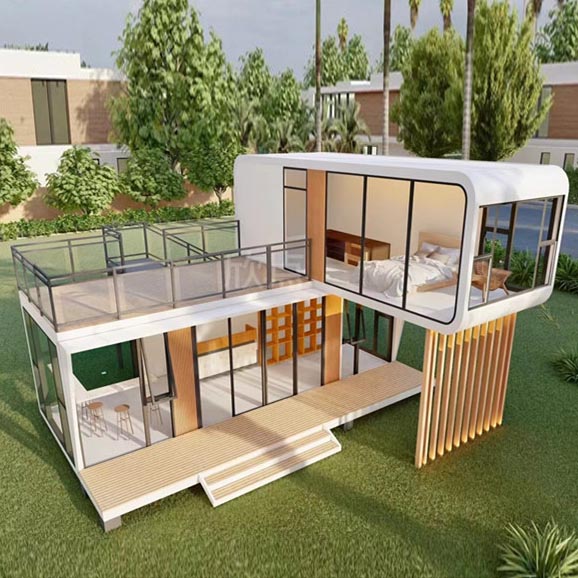
1. How Do Module Connections Affect Long-Term Structural Integrity?
A Residential Modular House is assembled from two or more modules that are joined on site. The connection between the modules is the most critical area for structural durability. If the connection is not properly designed and installed, the modules can move independently under wind load or thermal expansion. This movement creates cracks in the finishes and can compromise the weather seal. The connection must transfer shear, tension, and compression between the modules. The table below shows the connection types and their load capacity.
| Connection type | Shear capacity (kN/m) | Tension capacity (kN/m) | Typical application |
| Bolted steel plate | 45 – 60 | 30 – 40 | Standard residential |
| Welded steel plate | 80 – 120 | 60 – 90 | High wind or seismic zones |
| Post-tensioned rod | 30 – 45 | 80 – 120 | Multi-story modular |
| Adhesive + mechanical | 25 – 35 | 15 – 25 | Lightweight modules |
In our factory, we use bolted steel plates with a minimum shear capacity of 50 kN/m for standard residential modules. For projects in high wind zones, we use welded steel plates. We also apply a structural adhesive along the module joint to provide a secondary load path and to seal the joint against moisture. Cymdin has been manufacturing residential modular houses for over 12 years.
2. How Does Moisture Protection Determine the Life of a Modular House?
Moisture is the primary enemy of any building, but it is especially critical in a Residential Modular House because the modules are assembled on site, which creates more joints and penetrations than a traditional building. Water can enter through the module-to-module joint, the roof-to-wall connection, and the window and door openings. Once water enters the wall cavity, it can cause mold, rot, and corrosion. The table below shows the moisture protection layers and their function.
| Protection layer | Function | Material | Service life |
| Roof membrane | Primary water barrier | TPO or EPDM | 20 – 30 years |
| Wall weather barrier | Secondary water barrier | House wrap or fluid-applied | 15 – 25 years |
| Module joint gasket | Seals the gap between modules | EPDM or silicone | 10 – 15 years |
| Flashing | Directs water away from openings | Metal (aluminum or copper) | 25 – 40 years |
| Drainage plane | Allows water to drain out | Rainscreen or drainage mat | 20 – 30 years |
The module joint gasket is the most vulnerable component because it is exposed to UV, temperature cycling, and movement. We use a double-gasket system with a primary EPDM gasket and a secondary silicone sealant. The gasket is compressed when the modules are bolted together, creating a watertight seal. We also install a butyl tape between the modules before bolting to provide an additional moisture barrier. Shanghai Cymdin Industrial Co., Ltd. tests every module joint for water tightness before shipment.
3. How Do Climate and Site Conditions Affect Durability Requirements?
Durability is not a single specification. It depends on the climate and the site conditions. A modular house designed for a mild coastal climate will not perform well in a high-altitude desert or a tropical monsoon zone. The table below shows the durability requirements for different climates.
| Climate | Primary challenge | Required design feature | Material specification |
| Coastal | Salt corrosion, high wind | Stainless steel fasteners; reinforced connections | Marine-grade aluminum; hot-dip galvanized steel |
| Tropical | High humidity, heavy rain, termites | Ventilated cavity; termite barrier | Treated timber; plastic or metal framing |
| Desert | Extreme heat, UV, diurnal swing | Reflective roof; thermal breaks | UV-resistant membrane; aluminum frame |
| Cold | Snow load, freeze-thaw | Reinforced roof; ice dam protection | Steel frame; closed-cell insulation |
| Seismic | Ground acceleration | Flexible connections; shear walls | Steel frame; bolted connections |
Owner's tip: When ordering a Residential Modular House, specify the climate and site conditions. The manufacturer should provide a durability report that shows how the design addresses the specific challenges. The report should include the connection details, the moisture protection details, and the material specifications. In our factory, we provide a durability report for every project. The report includes a 10-year performance prediction for the structure, the envelope, and the finishes.
4. What Maintenance Is Required to Preserve Durability?
Even the most durable modular house requires some maintenance. The maintenance requirements are lower than for a traditional house, but they are not zero. The table below shows the recommended maintenance schedule.
| Component | Maintenance action | Frequency |
| Module joint gaskets | Inspect for cracks or compression set | Annually |
| Roof membrane | Clean debris; inspect for punctures | Bi-annually |
| Wall weather barrier | Inspect for tears or detachment | Every 3 years |
| Flashing | Check sealant; tighten fasteners | Every 2 years |
| Drainage plane | Clear weep holes; check for blockage | Annually |
| Connection bolts | Check torque; inspect for corrosion | Every 5 years |
In our factory, we provide a maintenance manual with every Residential Modular House. The manual includes a checklist and a schedule. We also offer a maintenance service for customers who prefer not to manage it themselves. Shanghai Cymdin Industrial Co., Ltd. recommends that the module joint gaskets be inspected annually and replaced every 10 to 15 years. This is the most important maintenance action for preserving the durability of the house.
Frequently Asked Questions About Durability in Residential Modular Houses
Summary for Modular Home Owners and Developers
Durability is the key to the long-term value of a Residential Modular House. The most critical factors are the module connections, the moisture protection system, and the climate-specific design features. A well-designed and well-maintained modular house can last 50 to 60 years, which is comparable to a traditional house. The maintenance requirements are lower, but they are not zero. The module joint gaskets must be inspected annually and replaced every 10 to 15 years. By specifying the right design for the climate and by following the maintenance schedule, owners can protect their investment and enjoy their modular home for decades. Shanghai Cymdin Industrial Co., Ltd. has been manufacturing residential modular houses for over 12 years and provides full durability documentation for our products.
Shanghai Cymdin Industrial Co., Ltd. manufactures Residential Modular House units with bolted steel connections, double-gasket moisture protection, and climate-specific design features. We provide durability reports, engineering calculations, and maintenance manuals for all of our products.